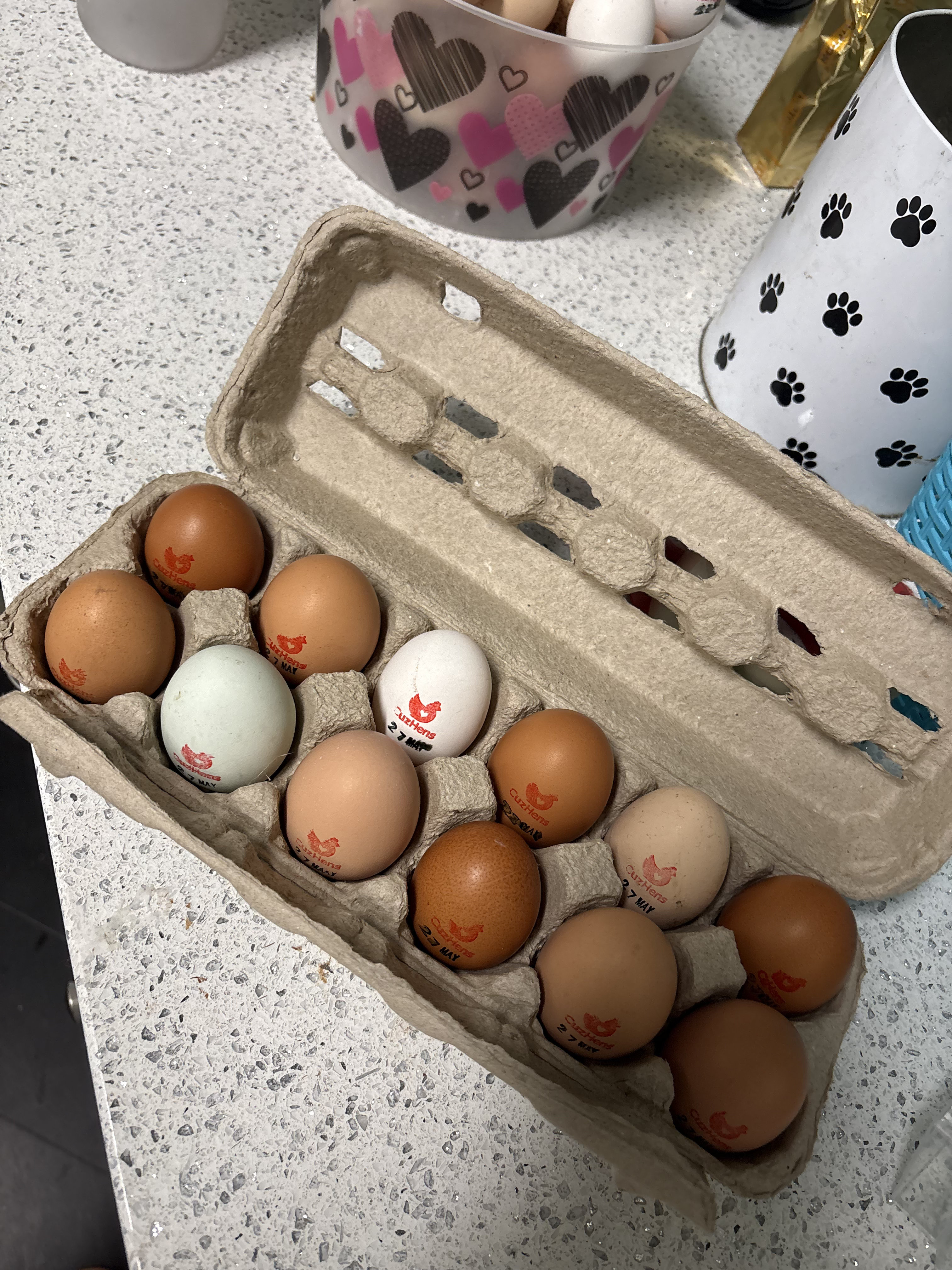
Essential Guide to Storing and Handling Fresh Farm Eggs Safely
Essential Guide to Storing and Handling Fresh Farm Eggs Safely
There's nothing quite like collecting warm eggs from your own backyard flock. But once you've gathered that beautiful basket of farm-fresh eggs, do you know the best way to handle them? Whether you're keeping eggs for your family or selling to neighbors, proper storage and handling makes all the difference between eggs that stay fresh for weeks and ones that spoil quickly—or worse, make someone sick.
Let's walk through everything you need to know to keep those gorgeous eggs safe and delicious.
The Great Washing Debate: Should You Clean Your Eggs?
Here's where farm-fresh eggs differ dramatically from store-bought ones. When a hen lays an egg, it comes with a natural protective coating called the "bloom" or cuticle. This invisible layer seals the porous shell and keeps bacteria out while allowing moisture to escape.
If your eggs are clean: Leave them unwashed. That bloom is nature's preservative, and you'll want to keep it intact. These eggs can sit at room temperature for up to two weeks or refrigerated for several months.
If your eggs are dirty: Wash them right before use, not before storage. If you absolutely must wash before storing (say, for selling to customers who expect it), use water that's warmer than the egg itself—about 110-115°F. Cold water can actually pull bacteria through the shell. Dry them immediately and refrigerate. Once washed, eggs must stay refrigerated and should be used within a month.
For selling eggs, check your local regulations. Some areas require washed and refrigerated eggs, while others allow unwashed sales with proper labeling.
Temperature Matters: Room Temp vs. Refrigeration
Unwashed farm eggs are remarkably shelf-stable. In most of the world, eggs sit happily on kitchen counters. In the US, we've gotten used to refrigeration, but you have options:
Room temperature storage (unwashed eggs only):
- Keep in a cool spot away from direct sunlight
- Ideal temperature: 60-70°F
- Shelf life: 2-3 weeks
- Perfect if you're using eggs quickly
Refrigerator storage (washed or unwashed):
- Store in the main body of the fridge, not the door (temperature fluctuates there)
- Keep in a carton or covered container to prevent odor absorption
- Ideal temperature: 35-40°F
- Shelf life: 3-5 months for unwashed, 4-5 weeks for washed
The cardinal rule: Pick one method and stick with it. Don't switch back and forth between room temp and refrigeration—condensation forms on cold eggs brought to room temperature, which can draw bacteria through the shell.
How to Tell If an Egg Is Still Good
Even with careful storage, you'll want to test older eggs before using them. Here are three reliable methods:
The float test: Place the egg in a bowl of water. Fresh eggs sink and lay flat. Eggs a few weeks old sink but stand upright. Eggs that float should be discarded—the air cell has grown too large, indicating age or spoilage.
The sniff test: Crack the egg onto a plate. A bad egg announces itself immediately with a sulfurous smell. When in doubt, throw it out.
Visual check: Fresh eggs have thick, gel-like whites that stand up tall. The yolk should be rounded and firm. Watery, flat whites or broken yolks that spread out indicate an older (though not necessarily bad) egg.
Best Practices for Egg Handling
Beyond storage, how you handle eggs daily matters too:
Keep nesting boxes clean. The cleaner the boxes, the cleaner your eggs. Add fresh bedding regularly and collect eggs at least once daily—twice in hot weather.
Collect eggs promptly. Eggs left in the coop too long are more likely to get dirty, cracked, or eaten by curious hens.
Store pointy-end down. This keeps the air cell at the top and the yolk centered, extending freshness.
Don't wash eggs in batches "for later." Only wash what you're about to use or sell immediately.
Date your cartons. Whether you're using a simple pencil mark or printed labels, knowing when eggs were laid helps you rotate stock properly.
Quick Reference Checklist
For maximum freshness and safety:
- ✓ Collect eggs daily, twice in extreme weather
- ✓ Leave unwashed eggs unwashed until use
- ✓ If washing, use warm water (110-115°F) and dry immediately
- ✓ Choose room temp OR refrigeration—don't switch
- ✓ Store pointy-end down in cartons
- ✓ Keep refrigerated eggs at 35-40°F
- ✓ Use the float test when in doubt
- ✓ Mark cartons with collection dates
- ✓ Discard cracked or foul-smelling eggs
- ✓ Know your local regulations if selling
Your Eggs, Your Way
The beautiful thing about raising your own chickens is the control you have over quality. Those bright orange yolks and firm whites you get from backyard eggs aren't just prettier—when handled properly, they're fresher and safer than anything you'll find at the grocery store.
Got questions about your specific setup? Maybe you're wondering about selling regulations in your area, or you've got a storage situation that doesn't quite fit the standard advice. Head over to our community forum where experienced chicken keepers share real-world solutions to everyday egg questions. We're all figuring this out together—one beautiful egg at a time.
Got a follow-up question or a tip of your own? Take it to the Community board.